


Creating A Research Presentation
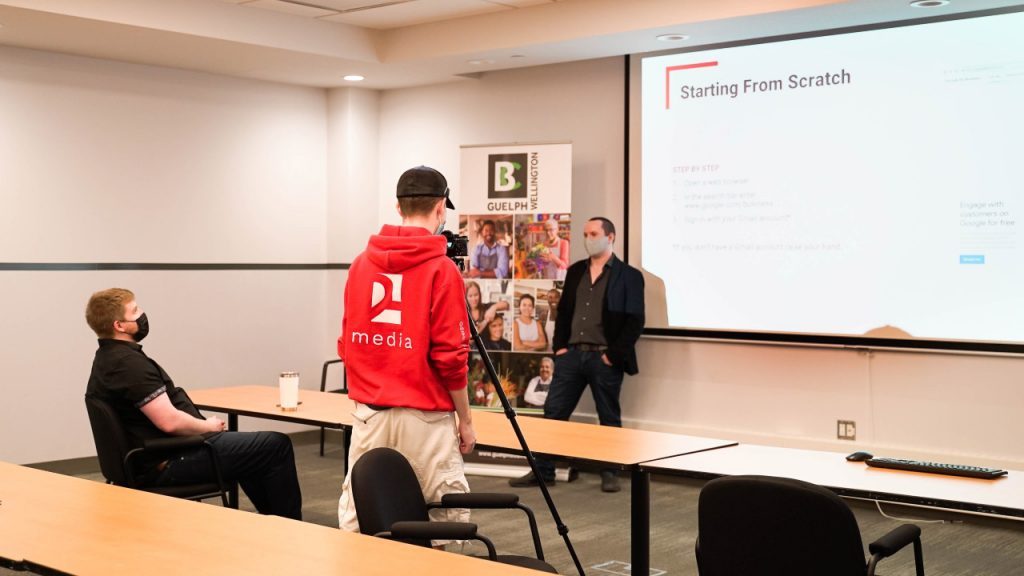
Creating a research presentation isn’t like creating a winning RFP presentation.
Unlike RFP presentations or client pitch presentations, a research presentation is less about subjective content and more objective content.
What do we mean by this?
Consider a sales pitch or a presentation aimed to sell you something. Basic presentation psychology suggests the presenter and the content target what human’s desire most. Depending on where they are in life, this can be easily deconstructed into Maslow’s Hierarchy of Needs.
These are all subjective feelings a presenter is trying to illicit from you.
On the other hand, a research presentation targets objective content. It doesn’t matter who you are or what you’re feeling, the presentation type is meant to be used to communicate the importance of your research, clearly state findings and prompt people in the world of academia to ask questions, provide feedback and to seek further information.
Let’s take a further look into how we can structure a research presentation properly along with the technical aspects that will be prominent throughout the entire presentation.
Technical Aspects
Technical aspects are items or the fundamentals you’ll be keeping consistent throughout the entire presentation. This includes style, coloring, tone of voice, font size, etc.
For the overall slide layout, you want to make sure your slides aren’t too text heavy. Funny enough, your research will probably be a couple hundred pages long but now you’re tasked with condensing everything to a few sentences.
You’ll want to avoid using full paragraphs on your slides. Instead, input 2 – 3 sentences per slides and use these as talking points. During your presentation, you should be facilitating most of the discussion through orally speaking. If the audience was tasked to read, they would be better off reading the actual research paper you produced.
If you find yourself using too many sentences, try incorporating visuals such as graphs or images you can speak to as well. These are all elements on how you can make a more engaging PowerPoint presentation through the use of visuals aids.
Title Slide
Each presentation, no matter the field of study, will have a title slide.
The title of the presentation will be the same title you used for your paper submission.
If given the option, people will decide whether or not they’re interested and will attend your presentation based on the title. As great as it would be to have a full audience, don’t be deceiving. Remember, this isn’t a sales presentation.
You must include your name and all colleagues, your mentor or advisor’s name, the department, class, location, name of the educational institution and the date the presentation is given. Avoid inputting any contact details.
All this information should be contained to one slide only.
Introduction
The introduction acts as a preface to your presentation where you’ll give context as to why your research is prevalent and interesting. Explain the broader impact your research has.
Consider this as the hook.
Background
This section of the presentation allows you to speak to the research which has already been conducted prior to yours and what inspired you to do further research. Be sure to include why your research is different from the research which has already been conducted.
Here, you may want to list the resources and authors you’ve been inspired by, specifically the work if they are a scholar with a broad background in research.
Don’t mix this up with references. This portion is more informal and is not a proper MLA, APA or Chicago style reference section. You may also opt to include an image of the book cover if there is a specific piece of literature you’ve read that you believe is worth mentioning.
Thesis / Question
Next, you’ll want to include a standalone slide which houses the research question.
Nothing else should be featured on this slide. This slide is only for the research question and a moment to allow the audience to absorb, digest and understand what the research is aiming to answer.
Research Methods

Your research methods slide should outline and describe how you went about collecting your information.
If you did actual experimentations, consider presenting an example or image of the experiment you’ve conducted. Ensuring proper methods of data collection is a key part of giving authenticty to your research.
Findings
Now that your audience knows how you went about collecting the data, you should now present the findings.
This is where you really want to focus your attention on developing appropriate graphics, images, charts or graphs to help convey the information in a clear and concise manner.
You really want the data itself to speak for itself. You may want to help break down a chart if it seems too convoluted but you shouldn’t be regurgitating numbers.
Conclusion
Once you’ve presented your data, you want to provide a summary of your findings.
This is where you come full circle. Ultimately at this point you should be able to answer the initial question or thesis you’ve mentioned at the beginning of the presentation.
You will also use this as an opportunity to analyze and discuss the answers you’ve derived from your findings on the previous slides.
Future Research
Depending on your presentation, you may decide to include this slide or not.
Based on your research goals, you may want to include what your future aspirations are when it comes to this line of research.
Have you sparked your own interest in furthering researching this topic?
If so, you may want to include this slide.
References

Note, you don’t need to include all your references on your reference slide but you should include the top 3 – 5 key references you’ve used.
Remember to format this slide in the appropriate referencing format required by your institution or department. This could be MLA style, APA style, Chicago style or another alternate format.
Acknowledgements
Unlike references, acknowledgements are used to give thanks to important people or institutions.
If you’ve had help from a mentor or advisor, you may want to give recognition here.
Furthermore, if you were provided funding or a grant, it’s best practice to give some form of acknowledgement here.
Questions

If you’re wondering how to end your presentation, a question slide is a great way to end.
By having a questions slide you’re providing the audience with an invite to participate in the discussion. It’s a great way to subtly get feedback on your presentation or help spark further questions you don’t have the answer to that you’d like to find the answer to in further research.
Be sure to take mental notes or written notes so you’re able to follow up at a later date with a proper answer.
Never fake an answer.
If you don’t know the answer to a question, you’re completely valid to state you don’t know the question but you’re planning on finding an answer for it.
Although it may seem intimidating putting together a research presentation, it doesn’t have to be. Depending on the nature of the project, you may consider outsourcing your presentation design to a team who specializes in various presentation design services like Presentation Geeks.
Giving An Oral Research Presentation

Now that we’ve covered the fundamentals of how the presentation should be structured and how it should look, that’s only 50% of a presentation.
You are the other 50%.
How you carry yourself in a research presentation is just as important as the slides that are accompanying you. In this portion of the article we’ll go over how you can polish up your presentation skills to ensure you’re acing your presentation – virtual or in-person.
Know Your Audience

First, you want to know who you’re presenting to.
More than likely it will be other academics. You may have family members joining in to support you and the educational journey you’ve been through but for the most part it’s academics.
In most cases, when presenting in front of other scholars and academics, the rule of thumb is to consider the presentation a formal presentation. There are both formal and informal presentations you’ll encounter in life, but a research presentation is a formal presentation.
It’s important to know your audience because everyone has different learning styles and how they want information presented to them.
Luckily, since you’ll be presenting primarily to other scholars, you don’t need to summarize your information too much. You can just industry related terminology which in other cases wouldn’t work.
Practice Your PowerPoint Presentation
As we’ve grown up, we’ve always heard the saying, “practice makes perfect”.
Your presentation is no different.
Before you present for real, make sure to practice your powerpoint presentation more than once. By practicing your presentation, you’ll be more confident in the flow of your presentation and you’ll solidify yourself as the expert in the field.
What To Wear

What you wear for your presentation plays an important role in how people establish their first impression of you.
Since we already know the presentation is going to be a formal presentation, consider wearing something to match the occasion.
This may include a suit, a blouse or anything else that might be deemed formal in our society.
Stick To The Time
We should all respect one another’s time.
If you’ve been giving a specific time slot for your presentation, stick to it.
Sticking to the time is not only respectful but is oftentimes critical to maintaining your audience’s interest.
For example, if your audience has been given handouts outlining the program of presentations for the day, then they are likely planning what presenters they want to see. They are also predetermining and anchoring their attention span. If they’re expecting a 10 minute presentation, they’re subconsciously limiting their attention span to the 10 minutes. Once you go over, they will begin to lose interest since they know you’re running longer than expected.
Don’t Read Your Slides
Lastly, do not read your slides.
Since this is your research presentation, you should be reviewed as the expert on the topic. Reading slides make you appear that you’re unsure of the content and needing supplementary guidance to help you speak to the overall research.
If you’re confident in your ability to speak on the topic without the slides, you’re solidifying yourself as the expert.
If you implement these two portions for your next research presentation, we’re confident you’ll excel.
Congratulations on completing your research!